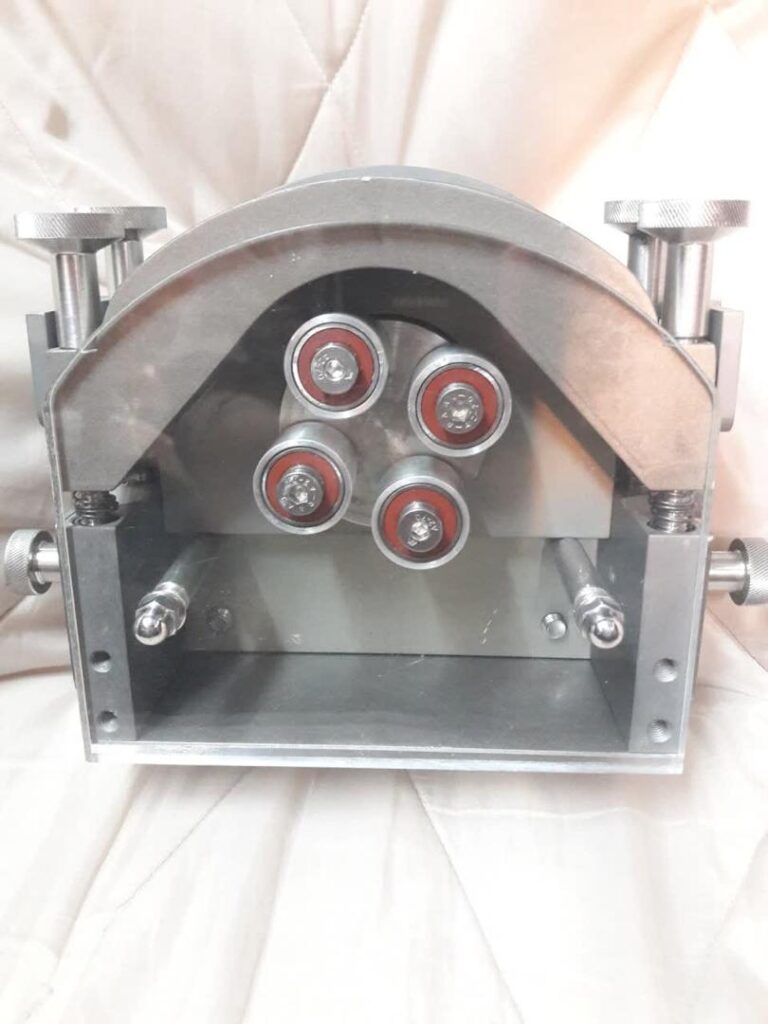
In fact, peristaltic pumps work on the biological principle of peristalsis, which involves the involuntary contraction and expansion of muscles in the digestive tract (esophagus, stomach, and intestines) to propel food. This pump can transport fluids by compressing and releasing pressure on a flexible tube. As the pump rotor rotates, the rollers are set in motion and apply pressure to the outer wall of the pump hose. As the pump rotor rotates, the rollers are set in motion and apply pressure to the outer wall of the pump hose. This rotational and oscillating motion causes suction to be created at the pump inlet and the fluid is transferred to the pump outlet. In fact, peristaltic pumps, like other pumps, consist of various components, each of which can have specific applications and tasks. The driver or electro-gearbox, pump head, sealing ring, flange mounting bracket, felt bowl, rotor, sight glass, shoe, hose or tube, and body are the most important components of these pumps, and each has specific functions and is effective in how the pump operates.